Foundation Stage 1 Nursery
Welcome to the Ducklings
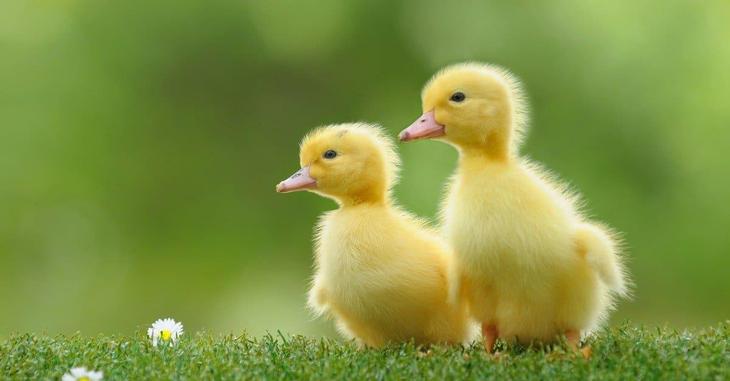
The Duckling Class
A warm welcome to our Ducklings class at Intake Farm Primary School. We're thrilled to be starting this new chapter with you and your children. We're committed to creating a safe, supportive, and inclusive environment where every child feels valued and encouraged to learn and grow.
The teachers in the Ducklings class are:
- Miss C Hough chough@intakefarm.notts.sch.uk (Teacher/ Joint EYFS Leader: Monday-Friday)
- Mrs R Brudzinska (Teaching Assistant: Monday-Friday)
- Mrs L Smoczyk (Teacher: Tuesday am)
- Mrs L Barnston: (Teacher/ KS1 Leader & Joint EYFS Leader : Wednesday from 1:40pm)
Miss Poole (HL Teaching assisstant/ Language Leader) also supports in the Ducklings class with language interventions.
Outdoor learning
We do outdoor learning every day, so please ensure that your child brings weather-appropriate clothing to school, e.g. sun hat, raincoat, hat and gloves (no scarves).
Please remember to label all belongings with your child's name, including water bottles, lunch bags, coats, hats, gloves and shoes.
DEIB
In the Ducklings class, fostering Diversity, Equity, Inclusion & Belonging (DEIB) means creating a welcoming environment where all children feel valued and respected, regardless of their background or abilities. This can be achieved by actively promoting inclusivity in the curriculum, creating an inclusive environment, and ensuring all children have equal opportunities. We celebrate all our similarities and differences in Ducking Class. We do this through books, music, food, visits and visitors.
See the DEIB link on the sidebar
Uniform
We do not insist on uniform in the Ducklings Class. We ask for the children to come dressed appropriately for active learning inside and outside the classroom environment. As we spend the majority of the day outside, a coat is always necessary.
P.E. is on a Wednesday for the Summer term. Children need to be dressed in leggings or joggers, a T-shirt, sweatshirt, trainers (that they can take on and off). All jewellery is to be taken out for the day and not covered.
Homework
Children will receive a Phase 1 reading book. This has no words; children are encouraged to tell the story. This book will be changed weekly.
Love of reading books (class library books) are changed weekly with the reading book.
Each half-term, on the home learning menu, we set practical tasks that are linked to the topic we are learning about. We ask that you upload your photo to Dojo (our parent platform), email them or bring the work into class.
British Values in the Foundation Stage.
Intake Farm Primary School
Foundation Stage promotes the 9 fundamental British values within the setting.
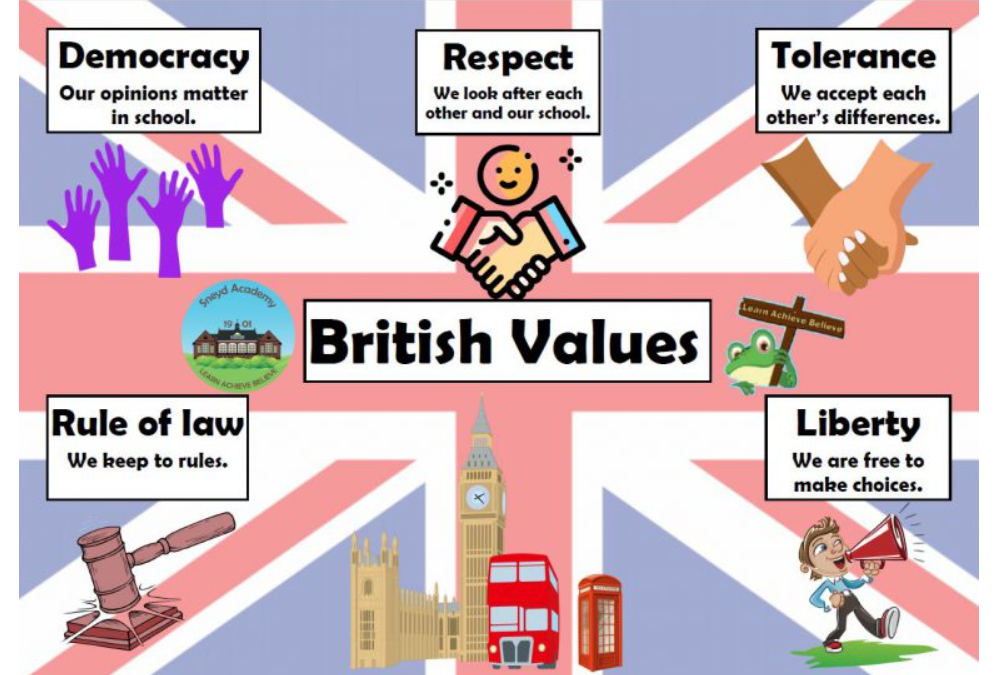
The fundamental British values are:
1. Democracy
2. The rule of law
3. Individual liberty
4. Mutual respect
5. Tolerance of those with different faiths and beliefs
We promote these values within the whole Foundation Stage, and these are at the heart of our setting.
1. Democracy – we all have a voice; we all promote change for the better
•Everyone at Intake Farm is treated equally
•We support and raise children’s confidence
•Developing an awareness of our own emotions and feelings and having an understanding of other people’s emotions and feelings
•All resources should be accessible to all children who attend the setting
•Letting children lead activities and practitioners follow their lead
•Developing children’s understanding of rules and boundaries within the setting
•Using visual cues
•practitioners being consistent in all approaches – behaviour strategies / SEND strategies / routines and rules and boundaries
•Giving children time to communicate
•Allowing children choices
2. The rule of law - we all need to follow rules and laws. Laws are put in place to protect us.
•Having rules displayed, so the children can visually see them
•Practitioners are consistent in the approaches they use within the room
•Positive reinforcement
•Supporting children’s understanding of self-regulation (managing their own feelings)
•Supporting children’s understanding that their actions have consequences
•Develop an understanding of right and wrong
3. Individual liberty
•Giving children the opportunity to explore and learn about the local community around the setting and locally to the setting
•Encouraging and promoting that every child has a voice and a right to be heard
•Everyone has opinions, and it’s OK for them to be different to someone else
•Encouraging children to look after their resources in the setting
•Encouraging children to respect each other
•Encouraging children to listen to each other
•Building trusting relationships with the children in our care
•Ensuring children feel safe and protected
•Supporting children’s understanding of our rules and boundaries
4. mutual respect - being respectful to all, ensuring everyone has a voice and to ensure everyone is treated fairly.
•Encouraging sharing
•Learning about respect and being respectful to others
•Understanding it is OK to be different
•Being part of the wider community
•Celebrating special moments
•Treating others like you would want to be treated
•Learning about similarities and differences
•Maintaining rules and boundaries in the setting
5. Tolerance of those with different faiths and beliefs
•Valuing all faiths and cultures
•Respecting all faiths and cultures
•Celebrating difference
•Learning about the wider community
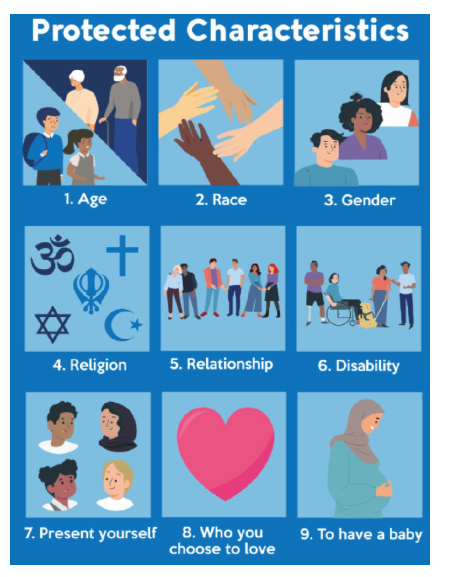
Protective characteristics in the Foundation Stage
All children In the Foundation Stage feel valued and respected regardless of their individual characteristics; this is done by incorporating diverse representation in the curriculum, actively addressing any discriminatory behaviour, and ensuring staff training on equality and inclusion issues.
Curriculum and learning environment:
Diverse representation
We include stories, pictures, and activities featuring characters from various backgrounds, ethnicities, abilities, and family structures.
Language
We use inclusive language and avoid gender stereotypes in our daily interactions and activities.
Accessibility
We ensure the learning environment is physically accessible for children with disabilities.
Cultural awareness
We integrate celebrations and traditions from different cultures into the curriculum.
Positive role modelling
We encourage staff to actively demonstrate inclusive behaviours and address any discriminatory language or actions.
Parent engagement
We actively involve parents in discussions about diversity and inclusion and seek their input on how to better support their children.
Observations
Our Observations, Dojo, and floor books show specific examples of how we incorporate diversity into daily interactions and activities with children.
Child-led learning
We observe and record instances where children show positive interactions and acceptance of differences.
Self-evaluation: We regularly reflect on our practices and identify areas for improvement regarding inclusivity and equality.
Physical Needs
We work with parents to provide adapted equipment and activities for children with physical needs.
We include children with disabilities in group activities and ensure peer support.
We work closely with parents and specialists to understand individual needs.
Race and ethnicity:
We read stories featuring diverse characters and discuss cultural differences.
We celebrate cultural holidays and traditions with appropriate activities.
We ensure staff are familiar with and use children's correct names and pronouns.
Gender
We avoid gender stereotypes in activities and language.
We encourage children to participate in activities traditionally associated with both genders.
We discuss gender equality and respect for all gender identities.
Continuous Professional Development for all staff
We regularly review our practices and ensure we are actively promoting equality and inclusion for all children.